Carbohydrate Fueling Strategy for Runners
6 minute read
By Vania Christiawantho, S.Gz, MM
6 minute read
By Vania Christiawantho, S.Gz, MM
Many runners spend hours devising training programs but neglect their nutrition. Yet, nutritional strategy follows measurable rules: there are specific figures, time windows, and clear breakdowns based on the duration of the run.
Here is a practical guide you can use right away, covering everything from daily requirements to snack choices leading up to the start.
How Much Carbohydrate Is Needed?
Carbohydrate requirements are calculated based on body weight (per kilogram), not by plate portions. Based on Academy of Nutrition and Dietetics (AND), Dietitians of Canada (DC) and the American College of Sports Medicine (ACSM), here are the needs for recreational runners and endurance athletes (Vitale & Getzin, 2019):
Example: A runner weighing 60 kg needs approximately 360–600 grams of carbohydrates daily. That figure sounds high, but it makes sense once you understand the content of a single serving. A 60-gram carbohydrate portion is equivalent to: 200g of cooked white rice, 3 medium bananas, 300g of sweet potato, 75g of rice cakes, or 80g of oats with 300ml of milk.
Pre-Workout Meal: Timing Is Key
Your menu choice shouldn’t be determined by taste, but by how much time remains before you start.
2 to 3 hours before the run: A full meal with carbohydrates as the main component (2-3g/kg body weight) with maximum 75 gram low GI carbohydrate (Burget et al.,2019). Examples: brown rice with grilled chicken and steamed vegetables, oatmeal with apple and banana, or a baked potato with chicken breast.
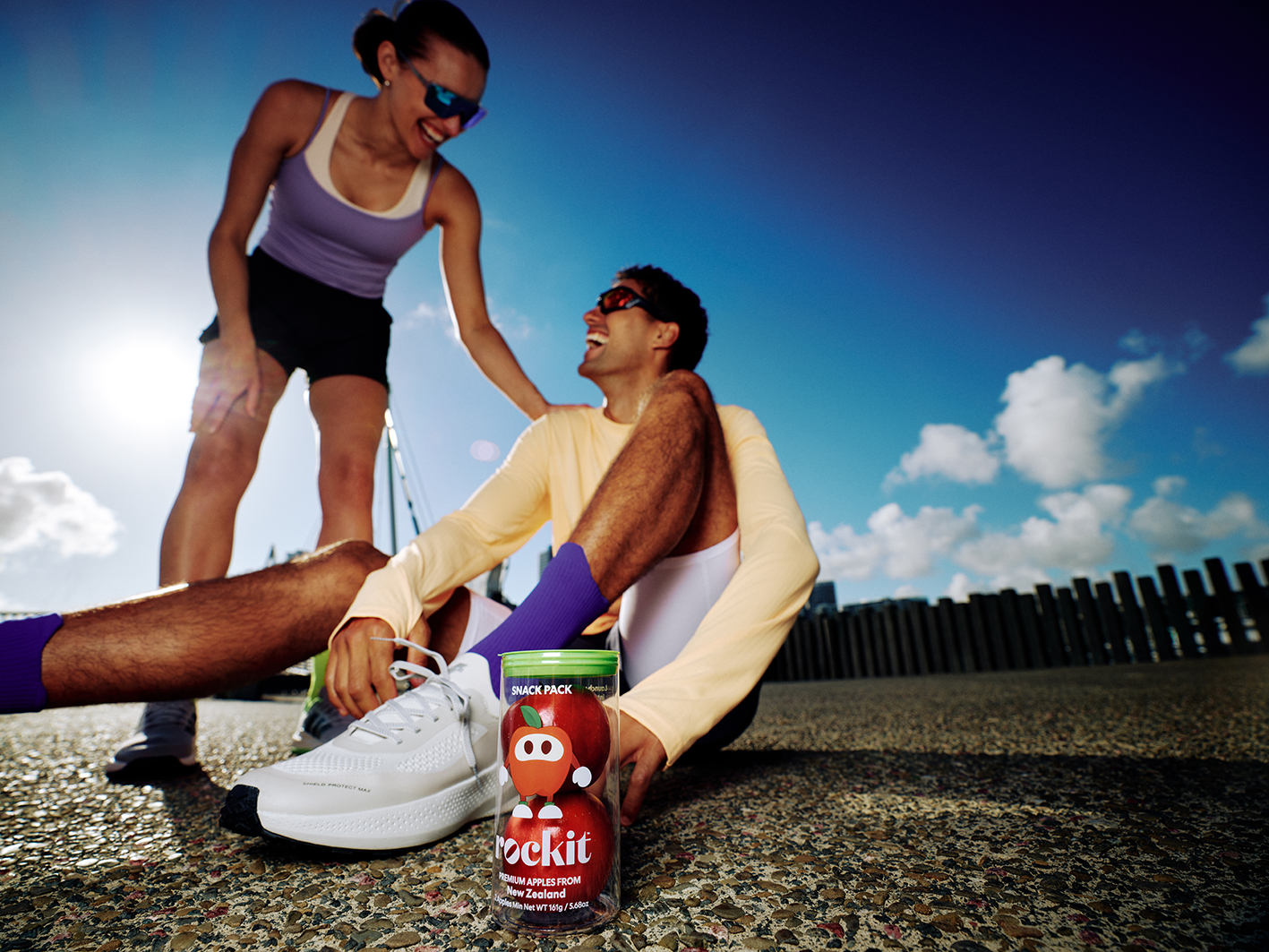
45 to 60 minutes before the run: A light, carbohydrate-based snack that is easily digested. Examples: Rockit™ apple or a granola bar.
The simple rule: the closer it is to the start time, the smaller the portion should be, and the lower the fiber and fat content.
During the Workout: Adjust Based on Duration
A common question among runners is how much supplementation is needed during a race. While requirements vary from person to person, the following recommendations are based on research by Podlogar et al.(2022):
Regarding fluids and electrolytes, in general, our body loses around 600 – 1200 ml of fluid per hour through sweat. To replace this, runners need to consume around 300-600ml per hour depending on their individual sweat rate (Nikolaidis et al., 2018).
One important note: this entire strategy must be tested during training, not for the first time on race day.
Apples as part of a Running Nutrition Strategy
Apples, like Rockit have a low glycemic index and contain a mix of simple and complex carbohydrates, as well as vitamins and minerals. A single medium-sized apple (approximately 180 grams) provides roughly 95 calories, 25 grams of carbohydrates, 4 grams of fiber, and nearly 200 mg of potassium. Its low glycemic index means energy is released more gradually compared with sweets or sugary drinks, which can cause blood sugar spikes.
Apples also contain polyphenols, including quercetin and other phenolic compounds, that have attracted interest in sports nutrition research. Studies have explored their potential role in areas such as exercise and endurance performance (Mizunoya et al., 2019) and the body’s response to exercise-induced oxidative stress (Yoshida et al., 2023).
However, if an apple is consumed too close to a run, the fiber content is a factor to consider, as it may cause digestive discomfort for some individuals. The solution is to allow a gap of at least 45 minutes between eating an apple and running to ensure stomach comfort.
While apples are not a “magic” performance booster, they can be a convenient source of carbohydrates and other nutrients within a balanced runner’s diet. For runners looking to support their overall nutrition, apples like Rockit can be a practical and enjoyable option to include regularly.
Rockit™ apples are one example of a convenient apple snack and are part of the Garmin Run Indonesia series. Learn more about this sweet and crisp miniature apple at rockitapple.com.
Source:
Editor’s note:
This article intentionally makes no claims regarding improvements in VO2max or performance resulting from the apple’s antioxidant content, as evidence involving trained individuals does not yet support such claims at realistic intake levels from whole foods.
Paid partnership with Rockit™ apple.
Rockit™ apples are available all year, in 30 countries around the world. Here’s where we are near you.